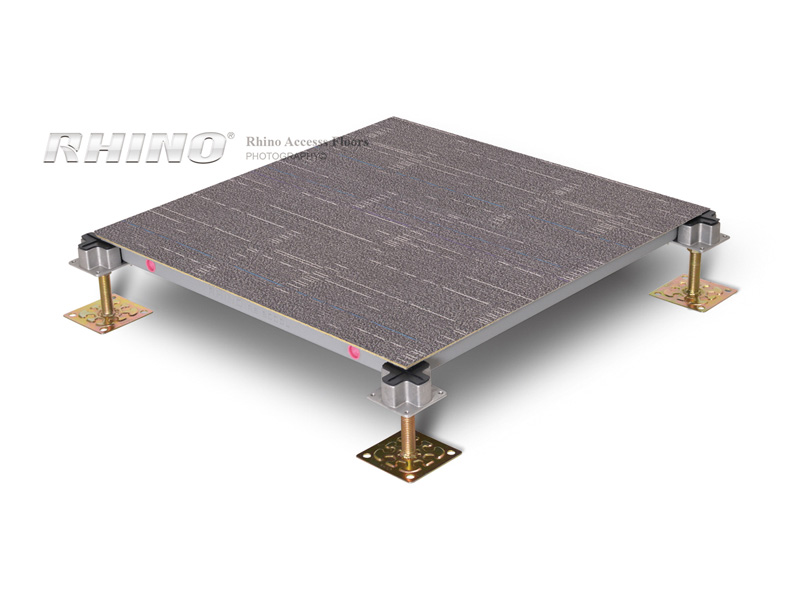
In high-end office buildings, a raised access floor is the working platform for churn: desks move, tenants change, and power, data and voice need to move with them. The floor also has to feel stable and reasonably quiet underfoot.
Typical areas include open-plan workstations, meeting and collaboration rooms, reception and lift lobbies, trading or professional-services floors with dense desk outlets, and offices that use the void for underfloor air as well as cabling. In existing buildings with limited floor-to-ceiling height, a low-profile system is often specified.
Rhino specifies medium-duty systems for this segment, with steel, calcium sulphate or chipboard cores and finishes suited to workplace interiors. Load, fire and acoustic requirements should be taken from the project specification; the standards commonly written into office briefs are listed below.
Where raised access floors are used
- Headquarters and Grade-A office towers where layouts are expected to change over the life of the lease.
- Open-plan workstations with relocatable floor boxes for power, data and voice.
- Banking, insurance, trading and professional-services floors with dense desk services.
- Meeting rooms, collaboration areas, reception floors and lift lobbies.
- Offices that use the floor void for underfloor air distribution as well as cabling.
- Existing buildings with limited floor-to-ceiling height, where a low-profile system is required.
Standards often specified
- EN 12825 is the European product standard for raised access floors. It classifies the system by ultimate load, safety factor and deflection, and is widely referenced on international office projects.
- In the UK and Ireland, PSA MOB PF2/SPU Medium Grade is often written for general office use; Heavy Grade is used where equipment loads are higher. These grades are not numerically equivalent to EN 12825 classes, so the two frameworks should not be mixed in one set of figures.
- CISCA recommended test procedures are commonly referenced on North American projects.
- Reaction to fire is usually classified to EN 13501-1. Where fire resistance of the floor is required, that is classified separately to EN 13501-2.
- Where acoustic performance of the access floor is specified, laboratory tests follow EN ISO 140-12. RhinoEU® calcium sulphate panels are published as non-combustible; confirm the required reaction-to-fire class on the project.
These are frameworks commonly written into a specification in this market. They are not a claim that a particular Rhino product is certified to every standard listed. Check the Technical Specs on each recommended Models page, and confirm the required tests with the project specification.