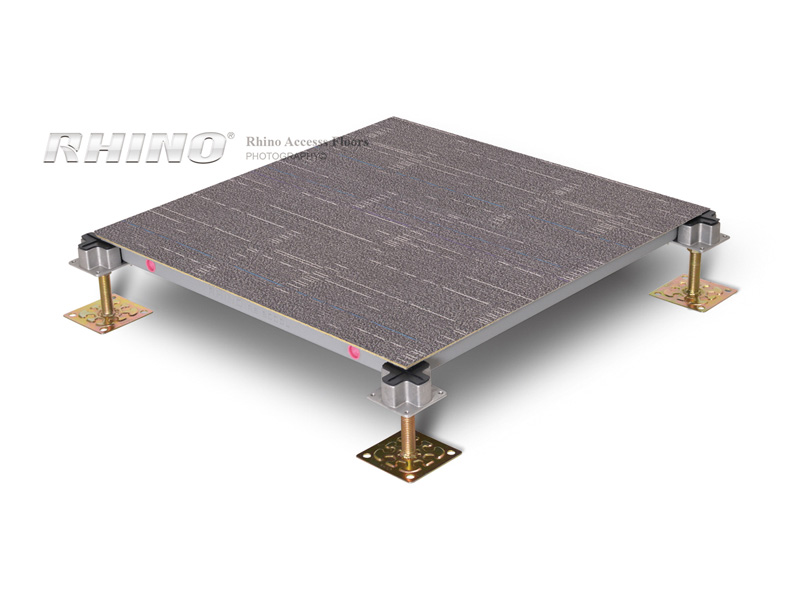
Airports use raised access floors in passenger-facing areas and in the operational rooms behind them. Check-in and ticketing halls, self-service kiosks, security screening, customs and immigration, departure lounges and retail all need power and data that can be moved when layouts and equipment change, without closing a 24-hour terminal for long or cutting into a finished slab.
The same floor idea is used in airline and terminal offices, airport operations centres, communications rooms and, where specified, air traffic control technical floors, so operator consoles and screens can be recabled from the void. Lounges and other public finishes often need a durable, cleanable stone-like surface on the access-floor panel.
Rhino already keeps an Airport category in Project Reference. RhinoROC® Stoneline is published specifically as a choice for airport lounges, among other high-end interior uses.
Where raised access floors are used
- Check-in and ticketing halls, including self-service kiosks, where counters and outlets have to move with airline layouts.
- Security screening and customs or immigration areas, where equipment and protocols change and a finished slab should not be cored for every upgrade.
- Departure lounges, gates and retail floors that need a durable, cleanable finish on an access-floor panel.
- Airline, terminal office and operations areas with frequent technology changes.
- Airport operations centres, communications rooms and, where specified, air traffic control technical floors serving operator consoles.
- Airport equipment or electrical rooms (these may also be specified under Equipment & Electrical Rooms).
Standards often specified
- Structural performance is commonly specified to EN 12825, or to CISCA test procedures on North American projects. Public circulating areas and control rooms are often written at a heavier grade than general offices (for example PSA Heavy Grade in the UK and Ireland).
- Reaction to fire follows EN 13501-1; fire resistance, where required, follows EN 13501-2. Terminals are public buildings, so the fire class is usually set by the terminal fire strategy, not only by the floor catalogue.
- Finish, slip and cleanability requirements come from the airport interior specification. A stone or porcelain finish on the panel is often used in lounges and other passenger-facing floors.
- Electrical outlets, kiosks and floor boxes must also meet the electrical and communications standards of the project country and the airport operator.
These are frameworks commonly written into a specification in this market. They are not a claim that a particular Rhino product is certified to every standard listed. Check the Technical Specs on each recommended Models page, and confirm the required tests with the project specification.